Who Destroyed the Restaurant
Three days after the freezer opened, Mark sat outside a child-advocacy interview room and watched the second hand travel around a silent wall clock.
Jack was speaking once with a trained forensic interviewer while Mark remained outside, exactly as the advocate had requested.
Police, attorneys, and authorized agency staff would rely on that recorded account instead of asking Jack to repeat it, while relatives would be told not to question him.
Mark had already given his own statement.
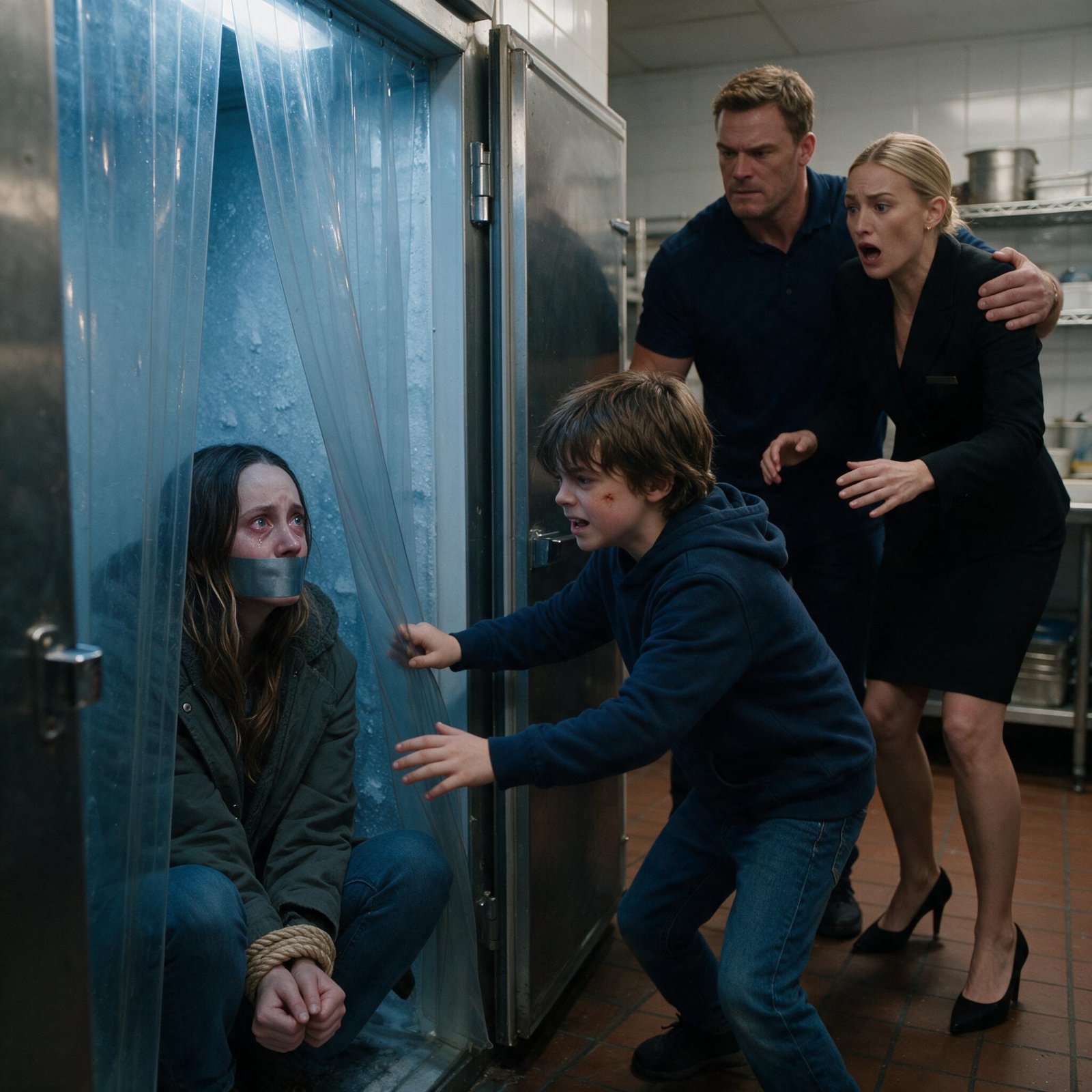
He described the restaurant call, Diane's explanation, Jack's certainty, and the moment he pulled his son away from the freezer.
Writing those facts in order had made one fact impossible to soften.
If the thump had come five seconds later, Mark might have taken Jack home.
The interview ended after forty-seven minutes.
The advocate brought Jack to a quiet room with a snack and told Mark only that his son had completed the process and should not be questioned about details.
Mark thanked her and did not ask Jack what he had said.
Lucy arrived with both wrists bandaged and stopped several feet from them.
She did not reach for Jack.
“I'm not asking him to forgive me today,” she said.
Mark waited while Jack decided whether to look at her.
“I'm not asking for custody to change today either.”
Lucy said she would follow the temporary order, attend counseling, maintain stable housing, and accept whatever pace protected Jack rather than her feelings.
Her restraint did not erase seven months, but Mark recognized the difference between restraint and disappearance.
“I should have kept calling you,” Lucy told Jack.
Jack stared at the juice bottle in his hands.
“Yes,” he said.
Lucy accepted the answer without explaining herself again.
Mark had his own sentence to say.
“I believed Diane because believing her let me stop asking difficult questions.”
Jack lifted his eyes then.
Mark told him that hearing a thump did not make swinging a meat tenderizer safe, but no twelve-year-old should have been left as the only person willing to open that door.
“You were right that someone needed help,” Mark said.
“I should have checked before you had to prove it.”
That afternoon, Mark met a family-law attorney and filed for divorce.
The attorney explained that a six-week marriage did not automatically qualify for annulment merely because Diane had concealed crimes and financial misconduct.
Mark did not need a more dramatic word than divorce.
He requested ordinary temporary orders concerning property, contact, and the apartment, then gave investigators the documents and devices they lawfully requested.
He did not take control of Hearth & Vine, question employees, or offer to rescue the business with money he did not have.
Diane remained represented by counsel while the criminal case moved through its first hearings.
The charges included unlawful restraint and offenses connected to coercing a witness, but no verdict had been reached.
A no-contact order kept Diane away from Lucy and Jack while the case was pending.
The fire marshal's report arrived the following week.
A commercial walk-in freezer was required to remain openable from inside, even when secured from the exterior.
Three weeks before the hook, Diane had authorized an unpermitted metal hasp that defeated the interior release whenever a padlock passed through it.
Lucy's wrists had also been secured to a low rack beyond reach of the door hardware.
The fire marshal ordered the freezer out of service, while the health department suspended restaurant operations pending correction of the safety violations.
The labor agency issued a separate preservation notice and continued reviewing payroll, tip, and banking records.
Hearth & Vine closed, leaving employees without scheduled shifts while their wage claims were still unresolved.
A worker center helped them file claims and apply for emergency assistance.
Diane's attorney sent a property notice describing Jack as the person who had damaged the freezer door and caused the restaurant's closure.
Mark read it twice before handing it to his lawyer.
The broken padlock had cost less than one dinner service.
The fire and health orders named the illegal hasp and disabled safety release, while the criminal complaint and labor notice documented Diane's other conduct.
Jack had broken a lock.
Lucy had fled instead of facing fear.
Mark had accepted the explanation most convenient to his new life.
Diane had made every decision that transformed missing wages into a locked freezer.
The broken lock occupied one line in the official reports, while everything that closed the restaurant had been put there by adults.
Part 4 of 5 · The Boy Who Destroyed His Stepmother's Restaurant