The Next Pair
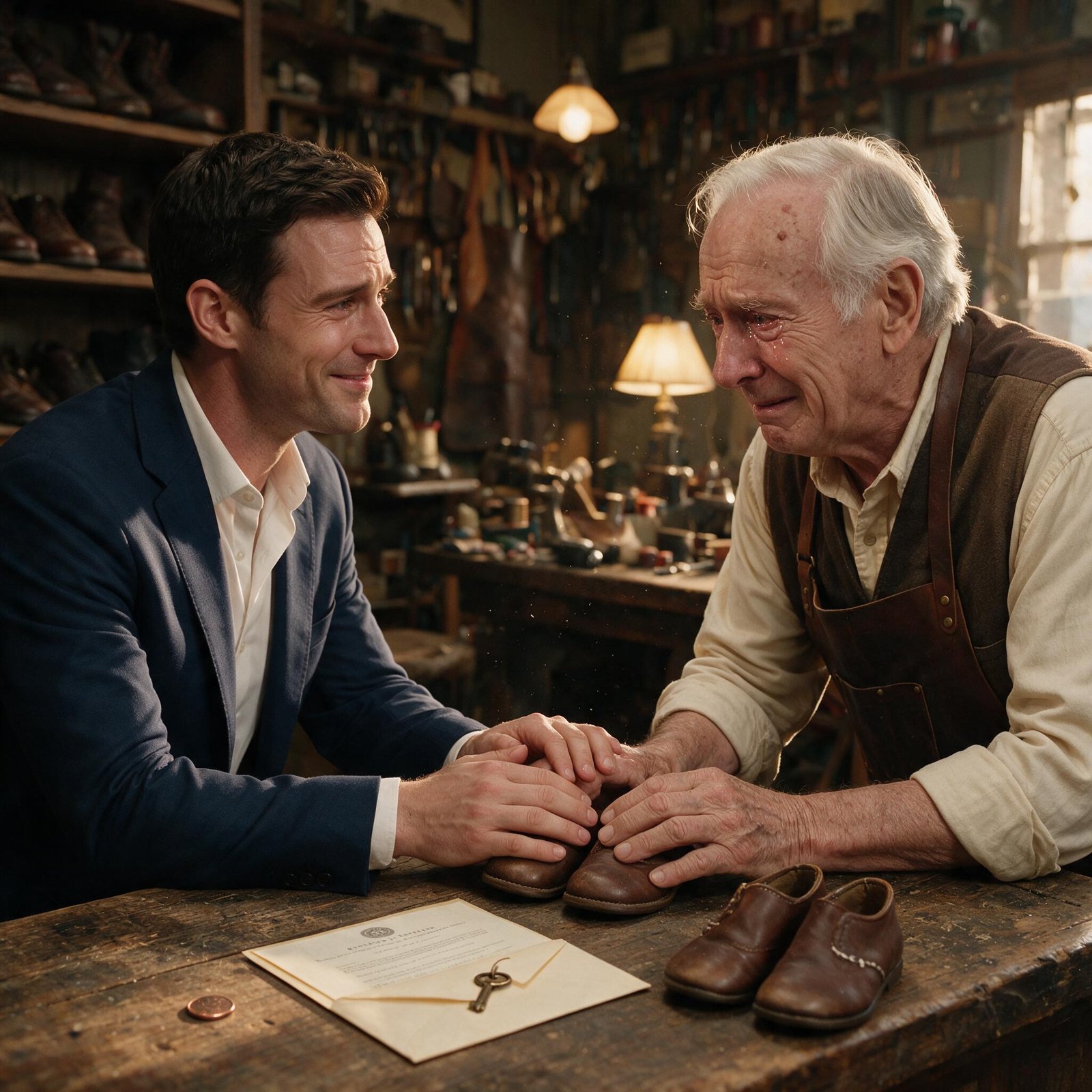
Six months later, Sam's name appeared on the recorded deed but nowhere on the one-penny program.
The shop still opened at eight, smelled of leather and polish, and earned most of its income from ordinary sales and repairs.
Eliminating rent had not made the business rich, but it had made the property tax, insurance, and a monthly maintenance reserve manageable.
Sam replaced a leaking section of gutter, serviced the aging furnace, and kept enough cash untouched for the next repair.
The brown childhood shoes stayed in their plain box beneath the counter rather than inside a glass display.
Sam had offered to return them, but Daniel asked him to keep them only if they remained private.
The pilot had provided eleven pairs during its first school semester, one fewer than its limit.
Grace considered the unused capacity evidence of honest planning rather than a target someone had failed to meet.
Counselors checked availability before making referrals, and families facing urgent needs after the semester allotment received referrals to other established resources.
The shop's ledger contained sizes, stock codes, card numbers, and pennies, but no photographs or descriptions of hardship.
Two children had exchanged shoes that rubbed, one needed a special-order width, and none had been asked to prove gratitude.
Daniel's company continued moving cartons on trucks already traveling the route, and the written service grant would end at the close of the year unless both sides renewed it.
The drivers knew how many sealed cartons to deliver but not who would wear the shoes inside them.
Daniel received one aggregated report each month because his contribution funded the inventory.
It showed costs, remaining balance, and the number of pairs sold without listing a single customer.
He had no approval authority and no private file of thank-you letters.
The absence felt strange at first because he had built his business by measuring routes, delays, and outcomes until every movement became visible.
He learned that responsible accounting did not require possession of another person's life.
On a bright Saturday morning, Daniel delivered the final two cartons from a delayed order himself.
Sam refused his offer to reorganize the shelves because the shop already had a system Daniel did not understand.
Daniel laughed, set down the packing list, and stepped back into the front room.
Nora stood near the register with her aunt while Sam checked the fit of the navy shoes she had bought on the rainy first day.
The purple laces were scuffed and the soles had worn evenly, while the shoes still left room for her toes.
She had come for the same ordinary fit check available to any growing customer.
Sam told her she could keep wearing them and asked her to return before they became tight.
Nora nodded, retied one lace, and left without recognizing Daniel.
He watched her go without disappointment.
Her ignorance of his role was not a missing reward but proof that the rule had held.
Grace arrived a few minutes later with the pilot's renewal figures and a recommendation to maintain the twelve-pair limit.
Demand had stayed steady, the protected account remained solvent, the shop absorbed no inventory shortfall, and Sam's recorded in-kind hours remained within the fixed service-hour cap.
Daniel committed another fixed contribution for a twelve-pair semester without adding expansion targets, press access, or his company name.
Sam approved renewal only after confirming that Grace's organization could continue handling private referrals.
They signed the agreement at the repair bench while an ordinary Saturday moved around them.
A customer collected resoled work boots, another ordered replacement laces, and the register rang for a full-price pair of walking shoes.
The program survived because it occupied a careful place inside a real business rather than replacing one.
When Daniel prepared to leave, Sam opened the wooden cash box and pointed to an old penny with a dark mark near Lincoln's shoulder among the newer coins from Daniel's return and the program purchases.
“You kept it.”
“It reminded me that price and value are different things.”
Sam closed the box and returned it beneath the counter.
The bell above the glass door sounded as Daniel reached the sidewalk with the empty cartons folded beneath his arm.
A young boy entered beside his father and a community counselor, carrying a numbered card backed by the father's written consent.
Daniel saw the child glance toward the shelves with the guarded hope he remembered from his own first visit.
He could have gone back inside and explained the promise that had started everything.
Instead, he carried the cartons to his car and left the counter to Sam.
Through the shop window, he watched Sam bring down two sturdy pairs in the correct size.
The boy tried both, walked the aisle, and chose the brown pair with rounded toes.
Sam checked the heel, pressed the leather above each toe, and wrote the stock code on an ordinary receipt.
The child reached into his pocket and placed one copper penny in Sam's open palm.
Sam smiled with the same quiet warmth Daniel remembered.
“Then they’re yours.”
Part 5 of 5 · The Shoes He Sold for One Penny