The Story Margaret Needed
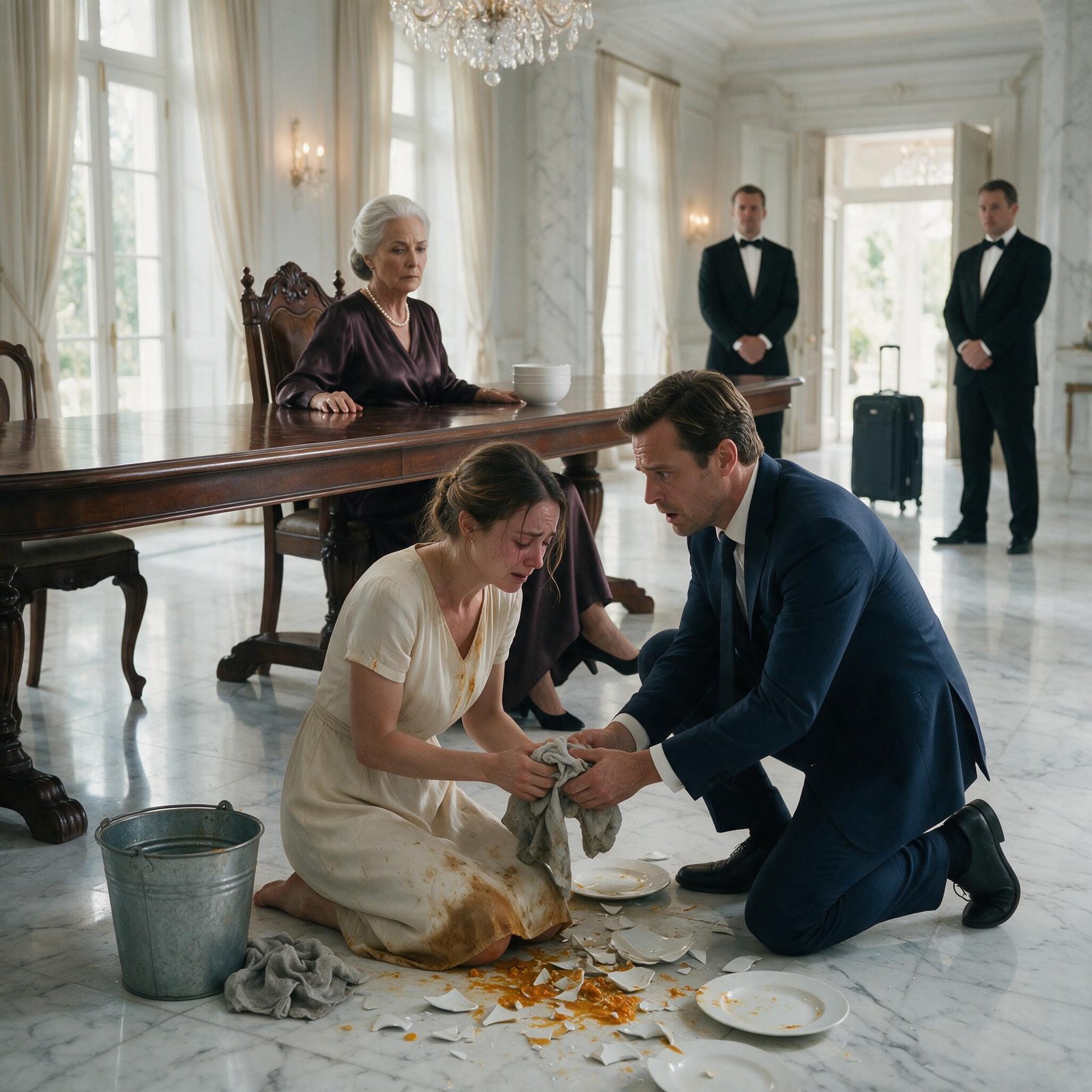
The following day, Daniel Carver sat across from Arthur in a quiet hotel parlor while Emma remained in her own room by choice.
He had been seventeen when the first version of his mother's porcelain story entered his life.
Until the conservator separated the modern pieces on her table, he had never thought to ask why the story began during the worst year his family had known.
Eighteen years earlier, the Carver finances had collapsed quickly enough that each week seemed to remove something Daniel had assumed permanent.
Rooms in the mansion went dark, familiar employees disappeared from the morning routine, and repairs were postponed beneath increasingly polished explanations.
His school sent a tuition notice that Daniel found folded beside Margaret's coffee cup, and the amount due looked impossible to a boy who had only recently learned that wealth could vanish.
Daniel offered to leave before the next term because leaving voluntarily seemed less humiliating than being told he could not return.
Margaret had held his shoulders and said that whatever else happened, his future would remain untouched.
He believed her because she made certainty sound like a resource nobody could repossess.
The authentic dining service still appeared on holidays at the beginning of that year, each piece thin, softly irregular, and edged with a gold line Daniel could trace from memory.
Daniel accepted Margaret's later claim that the old porcelain was stored safely because school consumed him and because accepting her answers had always been the price of being protected by them.
Arthur had agreed to talk about the old service only after making clear that resigning did not turn him into a family historian or an investigator.
He had worked at the mansion during the collapse and remembered helping Margaret wrap the authentic pieces in tissue at the dining table.
There had been place settings, serving bowls, a tea service, and two shallow platters bearing the older hand-painted border Daniel remembered.
Margaret inspected every piece before Arthur lowered it into three plain packing boxes.
Arthur dated the boxing to early September because the magnolia leaves had started browning and Daniel's school trunk stood open in the upstairs hall.
The dealer arrived on Tuesday, examined several pieces near the front windows, and handed Margaret a thick cream envelope before an assistant carried all three boxes away.
Arthur heard no price and did not know what the envelope contained.
He remembered only that the authentic service never returned.
The Tuesday timing pulled him back to the week when he had waited for Margaret to admit that his tuition could not be paid.
Daniel remembered Margaret bringing him back to campus that Friday, where an administrator told him his account had been cleared for the term.
He had kissed her cheek, ashamed of doubting her, and carried his trunk inside without asking what handling the balance had cost.
The boxes had left on Tuesday, but three days between two events did not establish that one funded the other.
Arthur would not claim a connection he had not witnessed, and Daniel would not turn gratitude into evidence.
To Daniel, the timing placed the vanished porcelain beside two crises he still could not separate: his uncertain future and Margaret's fear of visible collapse.
In his memory, the sideboards gradually filled with modern replacements while Margaret told guests the original service remained complete.
He began to see the foundation dinner as a public version of the continuity Margaret had spent years preserving.
Daniel inferred that Margaret wanted a wife's voice to make the family claim feel intimate instead of rehearsed.
To Daniel, Margaret's response looked less like protecting an heirloom than punishing Emma for refusing to protect its story.
Daniel felt anger rise, yet anger offered the same seduction as certainty because both allowed him to act before listening.
He remembered Emma telling him that leaving the mansion did not give him the right to manage the truth on her behalf.
Arthur wanted no public praise, no implication that the staff had endorsed the claim, and no version in which silence made employees responsible for Margaret's choices.
When the foundation chair called for final confirmation, Daniel withheld it and said no replacement wording could imply that the staff endorsed the claim.
He did not announce a hidden sale or offer the timing of his tuition as a solved equation.
After the call, he stood alone beside the hotel window and remembered his mother promising that his future would remain untouched.
For eighteen years he had heard love in that promise without asking what she had touched to keep it.
The real service had left on Tuesday and his school account was clear by Friday, but their nearness was still a question rather than an answer.
Part 4 of 5 · The Husband Who Chose His Wife