The Letters She Never Got
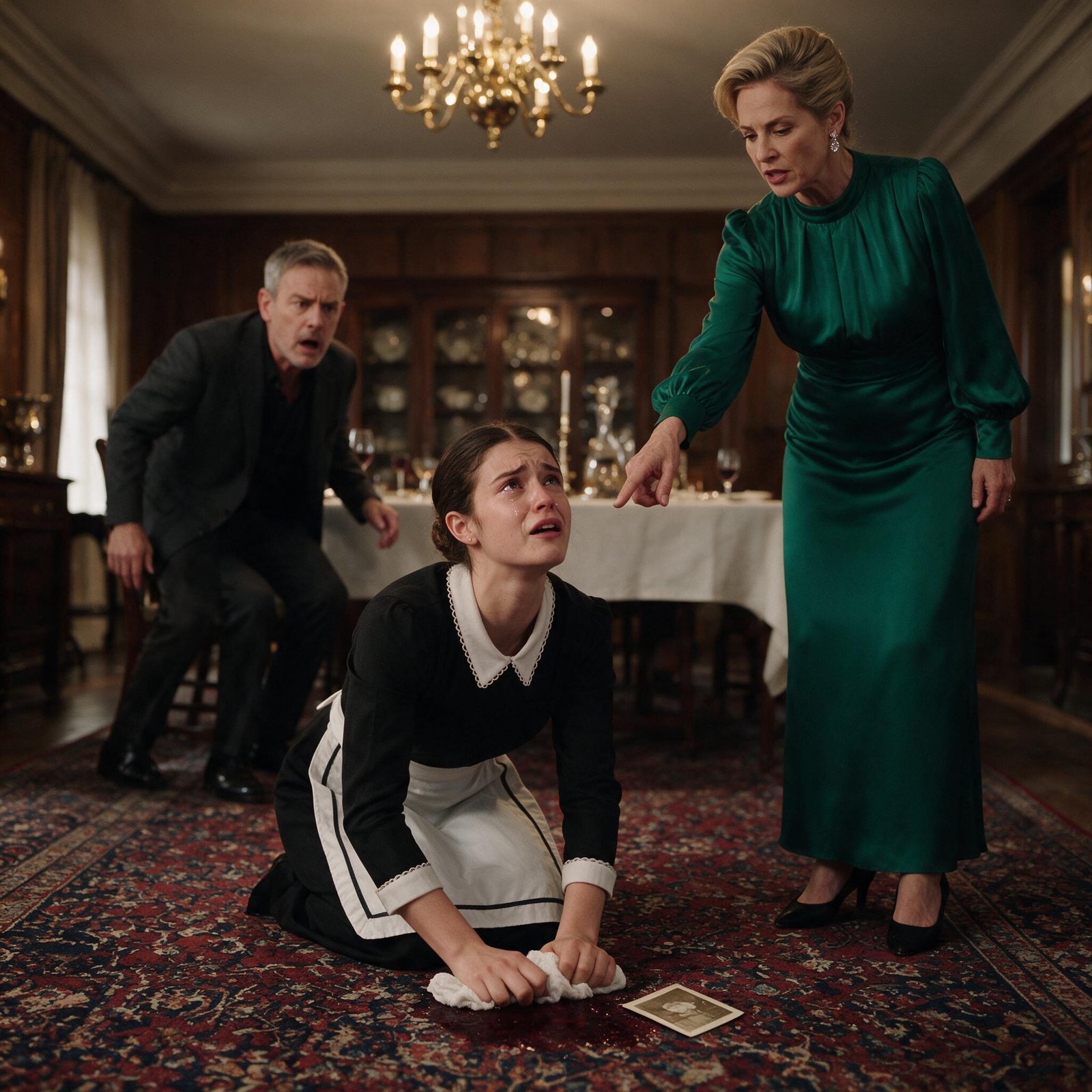
Sloane came back on Thursday with a lawyer and a suitcase, in that order.
She had spent two nights at the Delamar and she had used them well: by the time she walked into the dining room she had a narrative, and the narrative was that a maid with a photograph had walked into a grieving man's house and told him what he wanted to hear.
"There are people who do this professionally," she said. "You know that. It happens to men in your position constantly."
"Constance," Ross said. "Would you ask Miss Vega to come in."
"Ross."
"And bring the mail basket from the hall."
Sloane's face did something very small.
Elena had spent twenty-four years reading faces from below — from the floor, from the kneeling position, from the far end of rooms — and she saw it happen, and she understood that whatever was in the basket, the woman in the emerald dress had forgotten it existed.
---
The mail basket was a wicker thing on the hall table where forty years of Bellweathers had dropped mail on their way through.
Underneath the current layer of catalogs, at the very bottom, flattened by two decades of everything else, there were nine envelopes.
They were addressed in the same hand.
They were addressed to Mr. R. Bellweather, and every one of them had been opened along the top with something sharp and put back in.
The postmarks ran from 2003 to 2011.
Ross laid them out on the table in a row, in order, like a man dealing a hand he already knows is bad.
The last one was thicker than the others.
He opened that one first.
Inside was a letter in that same round handwriting, and a school photograph of a girl of about nine in a plaid jumper, gap-toothed, hair pulled into two tight braids by somebody who was in a hurry.
Elena made a noise she was not proud of.
"That's St. Brigid's," she said. "That's the uniform. That's — that was taken in the gym."
Ross read the letter aloud, because his hands were shaking too much to pass it over.
It said that Marisol had not written in four years because she had been told very clearly what would happen if she did. It said that she had lost the apartment on Ellsworth Street in the fire and that the state had taken Elena while she was in the burn unit in Bridgeport with smoke injury to her throat, and that by the time she got out, a caseworker had written mother deceased on a form and no one would tell her which home the child had gone to. It said that she had been trying for three years to get the record corrected. It said, I am not asking you for money, I am asking you to make one telephone call, because they will listen to a man like you and they have never once listened to me.
It was dated the fourth of June, 2011.
It had been opened, read, and put at the bottom of a wicker basket.
"You knew," Ross said.
He did not shout this time.
Sloane's lawyer began to say something about the difference between knowledge and intent, and Sloane put her hand on his sleeve, and for a moment she looked at her husband with something that was almost honest.
"She was a housekeeper," she said. "Ross, she was twenty-two and she was a housekeeper, and you were going to blow up two families for it. I was eighteen years old and I fixed it. Everyone was relieved. Your mother sent me lilies."
"You told her I asked for it."
"I told her what would make her go," Sloane said. "That is the same thing."
---
She left that afternoon. The suitcase, it turned out, had been for optics.
Afterwards Elena found Constance Dolan in the kitchen with her hands flat on the counter, not cooking anything.
"Mrs. Dolan," she said. "How did the agency get my name?"
Constance did not look up.
"Angie Marchetti's mother and I did school dinners together for eleven years," she said.
"That's not what I asked."
The old woman was quiet for a while.
"I saw you in June," she said. "You were doing a christening in New Canaan. I was there for the food and you carried a tray past me and I put my hand on a chair to keep standing up." She turned around. "You have her exact face. Not similar. The same. I went home and I sat in my car for twenty minutes and then I called Angie and I said, if a Vega girl ever comes up on your list, send her to Greenwich and I will owe you for life."
Elena stared at her.
"You planned this."
"I arranged a job," Constance said. "I have wanted somebody in that dining room to drop something for twenty-four years."
She picked up a dish towel and put it down again.
"There's one more thing," she said. "Those nine are the ones she wrote to him. There were others."
"Others."
"Christmas cards. Every year, addressed to the house, not to him." Constance folded the towel into a square she did not need. "Those never went in the basket. Mrs. Bellweather brought the mail in every day and I watched her open one at that counter in 2014 and put it in the trash under the coffee grounds, and I took it back out after she went up, and I have it in my room."
Elena did not trust herself to speak.
"They stopped in 2016," Constance said. "But Marisol never had a permanent address after the fire, so she always sent them from the same place — the parish office on Ellsworth Street."
"That building burned down."
"The building burned down," Constance agreed. "The parish is still there."
Part 4 of 5 · The Maid and the Photograph